
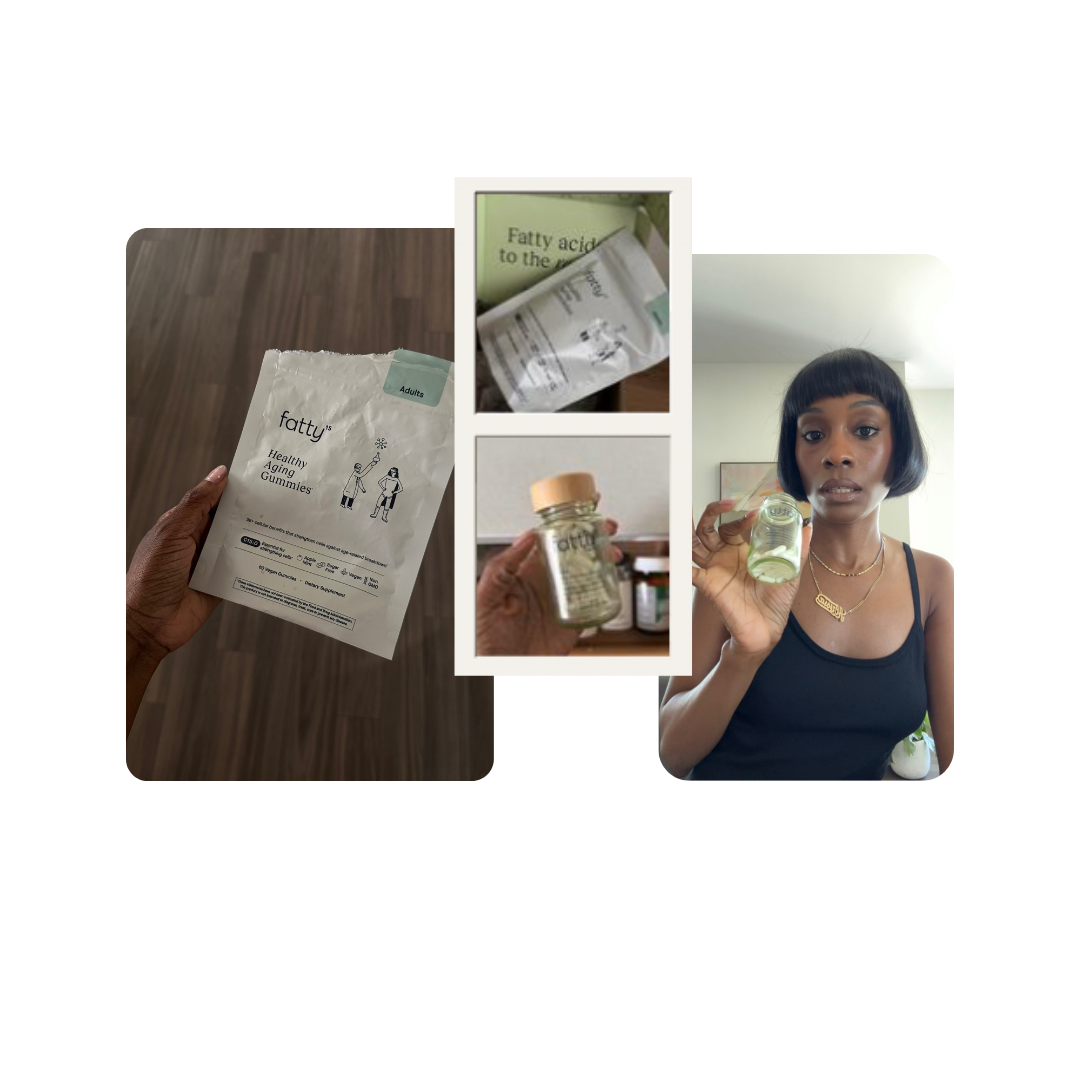
For a few years now, I’ve been interested in fatty15 due the benefits I’ve been reading online. It supports the healthy aging of our cells and also has some benefits for chronic inflammation. Living with endometriosis, which is recognized as a chronic inflammatory condition, has made inflammation a huge area of focus for me. I pay close attention to everyday practices that support a healthy inflammatory response. These include the foods I eat, stress management, and the supplements I take. This journey for me has not been easy. Within the last year and a half, I’ve experienced some new symptoms that I didn’t expect (more on that another time) but still, I am not giving up. I do hope my experience can help another woman out there, too.
I began incorporating fatty15 in my supplement routine earlier this year starting with the fatty15 gummies back in April and once I finished that, I moved onto the capsules. Prior to adding fatty15 to my routine though, I’ve been streamlining my supplement routine. The sheer amount of supplements out there (and in my own routine) is becoming overwhelming and I just want the best of the best for me. That’s all. When it came to getting more familiar with C15:0 (the pure ingredient in fatty15) , also known as pentadecanoic acid, I grew more and more interested in just how much this supplement could do. I was curious to know things like: Could C15:0 replace an omega-3? What does the emerging research say about C15:0 and inflammation? And what are people consistently experiencing after taking fatty15 over long periods of time?
This summer, I was given the opportunity to partner with fatty15 but my intentions for the partnership were to give myself and my community the answers to the information we’re seeking for our own bodies. I collected some of the questions that came up within my Instagram community, added a few of my own, and sent them to the fatty15 team.
What I learned from the fatty15 team is below and the questions from the community can be found here.
AF: Thank you for taking this time to connect. I’d love to know how fatty15 could benefit those that deal with chronic inflammation like myself?
fatty15 Team: Yes! While Fatty15 is not intended to prevent, manage or treat diseases, multiple studies support that C15:0 can help to promote healthy, calmer immunity. This includes C15:0’s demonstrated ability to actively and broadly lower 18+ pro-inflammatory cytokines and chemokines in human cell systems modeling chronic conditions, as detailed in this study: https://www.nature.com/articles/s41598-020-64960-y.
Pro-inflammatory cytokines are messenger proteins that signal our immune system to “gear up” and create inflammation to help fight off infections or heal injuries. The problem arises when too many of these signals go on for too long, leading to chronic inflammation.
Additionally, higher circulating C15:0 levels in humans have been linked to lower inflammatory markers, as discussed in this study: https://pmc.ncbi.nlm.nih.gov/articles/PMC8547188/
AF: Should fatty15 be taken separately from other supplements? What can/cannot be combined with fatty15? Is there a specific time of day that is best to take it?
fatty15 Team: I’m happy to share that there are no known interactions between fatty15 and medications or other supplements. Although, a gentle reminder for those taking psyllium husk or similar supplements, to avoid taking psyllium husk at the exact same time as other oral supplements or medications. Psyllium husk forms a thick gel in the digestive tract that can bind to nutrients, potentially lowering their absorption. That said, everyone’s health is always our top priority—which is why we recommend checking in with a doctor before starting any new supplement, including fatty15.
AF: I’ve been taking omega supplements on/off since I was a kid to fill any gaps in my diet. I’m curious to know, can C15:0 replace my omega-3 supplements or can I continue to take both?
fatty15 Team: For those taking an omega-3 for a boost beyond baseline health, fatty15 can replace it. However, while both C15:0 and omega-3 are essential fatty acids, they’re different molecules; therefore, taking fatty15 will not raise omega-3 levels. While they can complement each other really well, recent peer-reviewed studies have shown that pure C15:0 (fatty15) has 3x more clinically relevant cellular benefits compared to pure EPA omega-3s — especially for immune, metabolic, heart, and liver health. Additionally, there is a wide variety of omega-rich foods—and not just fish! This is likely why there is no distinct, named syndrome associated with an omega deficiency.
In contrast, C15:0 is found in trace amounts in whole-fat, grass-fed dairy and in certain types of fish (primarily in the skin, head, and eyes). Further, the science supports that C15:0 deficiency leads to cellular fragility syndrome. Here’s a great dive deep on how fatty15 compares to omega-3s: https://fatty15.com/blogs/news/deep-dive-fatty15-vs-omega-3-study
AF: Interesting! Are there any new studies or evidence about the benefits of C15:0 that consumers should know about?
fatty15 Team: Nearly every week—the science is just exploding! The latest study published by Kalfir et al., at the Bulgarian Academy of Sciences, builds upon the mounting body of science on C15:0 as a longevity nutrient due to its ability to inhibit mTOR safely. Specifically, they set the stage for clinical trials to better understand C15:0’s role in supporting female fertility.
Dr. Stephanie Venn-Watson puts out a weekly newsletter called “Science Says” sharing the latest science on C15:0 for our community. We highly encourage signing up to nerd out!
AF: Lastly, what is the most common benefit that consumers have repeatedly reported from using fatty15?
fatty15 Team: Interestingly, 3 out of 4 people report experiencing better energy, less snacking, calmer mood and/or deeper sleep within weeks of consistent fatty15 use. Additionally, fatty15’s immune calming activities have resulted in customers reporting better joint comfort and calmer, less red skin. It’s worth noting that fatty15 works on a cellular level to make our cells stronger and more resistant to breakdown, which isn’t always immediately obvious. After 4-6 months of consistent use, is when clinically relevant benefits may be seen from blood labs taken during routine check-ins.
I really appreciate the team for taking the time out to answer my questions and I look forward to continuing documenting my fatty15 journey. If you are interested in fatty15, you can use code ALYSSA15 to get 15% off your first month’s supply for a limited time.
This website includes affiliate links. These are at no cost to you. I may earn a small commission if you choose to use my links. Thank you for reading and supporting!
